
How to size football jerseys over shoulder pads
Test a football jersey over the shoulder pads the player will wear on the field. Record how the sample fits through the shoulders, sleeves, chest, and waist, then use that same garment’s measurements to confirm the production size. A size letter by itself is too imprecise for a team order.
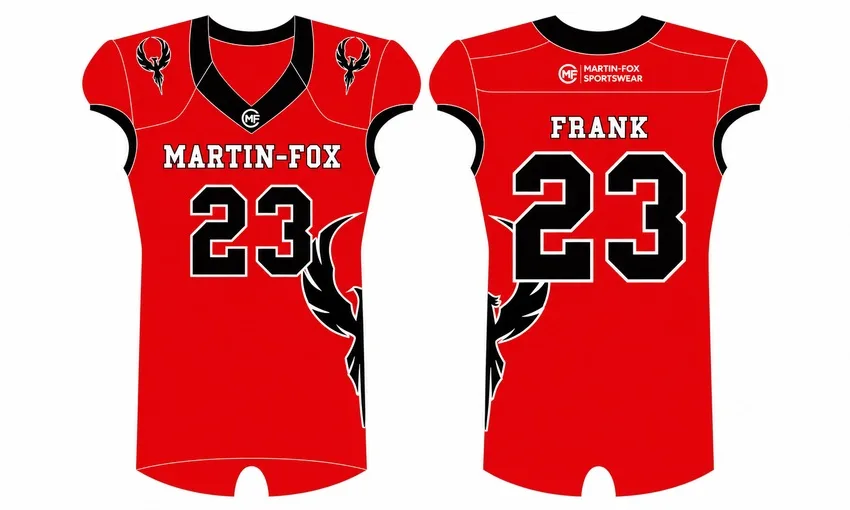
Start with the garment and equipment the player actually uses
Set up the fitting with the player’s normal base layer and adjusted shoulder pads. Include any separate equipment that routinely sits under the jersey. If two players wear the same tagged pad size but use different pad styles, fit them individually. The shape and profile of the equipment affect where the jersey sits around the shoulders and upper arms.
Use a sample from the intended jersey cut when you can. If you have only an existing game jersey, pick one with the fit you want to repeat. Record the brand, cut, tagged size, and measured dimensions, then ask how that reference corresponds to the proposed garment. A practice jersey that drapes loosely can provide a poor reference for a closer game cut.
Measure a good reference jersey flat
Lay the jersey on a flat surface without pulling the fabric. Measure straight across from one underarm to the other, and write down that flat width. Measure body length from an agreed top point, such as the shoulder beside the neck, to the bottom hem. Note the measurement points with a simple sketch or photo so the buyer and supplier measure the same way.
Ask for the proposed garment’s chart and whether its chest measurement is a flat width, a circumference, or a recommended body measurement. Those numbers mean different things. For example, a jersey measuring 22 inches flat has roughly 44 inches of garment circumference at that line when laid symmetrically. That example does not determine the correct size for a player. Fit over pads still depends on the shape, fabric, and cut.
If sleeves have a tight opening or an elastic cuff, record the opening without stretching it. Check whether the vendor measures from the shoulder seam, collar, or underarm when comparing sleeve lengths. Keep all measurements in one unit or write the unit beside every value.
Check the fit in three football positions
Start with the player standing normally. Check that the neck opening lies comfortably, the jersey sits evenly over the pads, and the sleeves do not press into the arms. Look at the shoulder seams and lettering with the pads in place. A wordmark that looks centered on a flat proof can shift when stretched around equipment.
Have the player reach forward and raise both arms. Watch for pulling across the upper back and underarms. Ask whether the neck or sleeve opening catches. Then have the player move into a stance typical for their position, such as a crouch for a lineman or a ready stance for a receiver. Note if the hem rides up or the fabric gathers where equipment is adjusted. Use the team’s normal fitting supervision and have the player flag discomfort immediately.
If one size solves a sleeve problem but leaves too much body length, compare a different cut or ask about dimensions. Increasing size is only one option. The next size may also add chest width and length the player did not need.
Keep a roster worksheet that separates size from artwork
Use one row per player or spare garment. Include an internal roster ID, requested cut, approved size, jersey number, exact printed name if needed, and a fit note. An example row could read: A12, adult game cut, fitted sample Large, 23, RIVERA, needs the standard body length. Keep the exact name and number in their own columns so the artwork review does not depend on interpreting a fit note.
Add totals by size and cut, including separately sized youth and adult garments. Record which fit sample and size chart version you used. Keep spares in separate rows with their intended number or mark them as undecorated if that is the plan. A team manager can then compare the order quantities with the roster without counting the same players twice.
Handle players who are between sizes
Try adjacent samples with the same pads and base layer. Ask the player which sample gives comfortable movement and meets the intended fit. Record both sizes tried and why the team picked one. If a player expects to use different equipment later in the season, check with the equipment manager about the likely pad profile before finalizing.
For players who miss the fitting, send the same measurement instructions and ask for a reference garment. Treat the resulting size as provisional until someone compares it against the intended chart. Do not quietly substitute a size from a different roster or season. Youth sizing in particular needs a fresh check if the player has changed pads or grown since the last order.
Send the fitting record with the quote request
Send totals by size, pad and cut notes, front and back artwork, league number requirements, and the delivery destination and target date. Ask the supplier to confirm the garment chart, fitting sample availability, and whether the proof will show names and numbers at their production placement. Keep the final proof and the final roster together as the source for approval.
Once a sample is approved, label and retain it as the team’s fit reference for later orders. Record any changes made after the sample round. When a replacement is needed, check the player’s current equipment and compare the new order to that reference. This preserves the reason behind the original choice even if a different team manager places the reorder.
Check production garments against the approved fit
When the order arrives, choose examples across the size range and compare the agreed garment measurements with the retained sample and production chart. Then match player names and numbers to the roster. If you find a difference, record the garment label, the measurement point, and the actual measurement before distributing it. A clear fit record helps distinguish a production difference from a roster or size-selection error.