
Reversible basketball jersey buying guide
A reversible basketball jersey gives a player two color looks in one garment. Before asking for prices, decide what the light and dark sides each need to do. A jersey used to split squads in practice may call for a simpler design than one worn for official games.
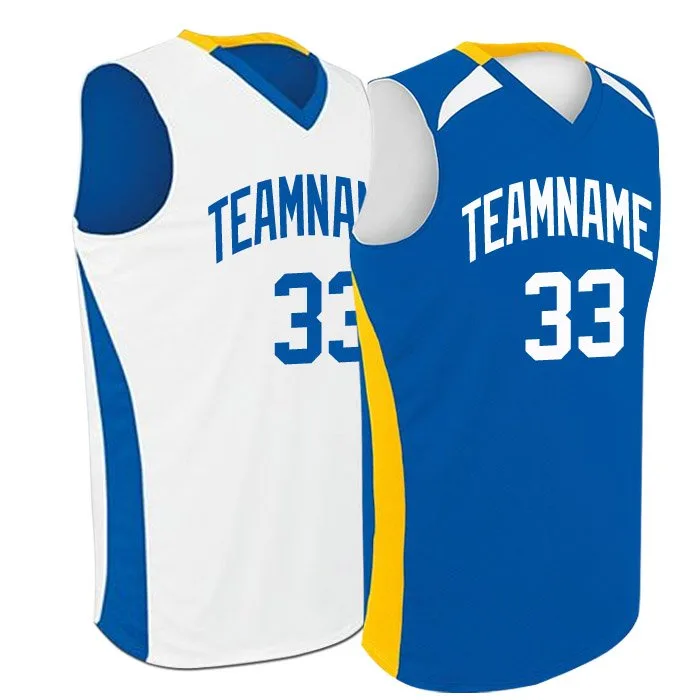
Decide whether the jersey is for practice, games, or both
For practice, prioritize the contrast that lets coaches and players identify each squad across the court. A readable number may be useful even if it is optional for that session. For games, review your league’s current rules before choosing color combinations, trims, and decoration. Ask the team manager which side is intended for each kit and whether the jersey needs to match separate home and away shorts.
Some teams use practice-only reversible jerseys and maintain separate game jerseys. Others want a single item for both uses. Compare those options using the actual pieces your team needs, including shorts and spare sizes. Two sides can simplify how a team packs jerseys, while separate garments may make it easier to replace one design or use substantially different constructions.
Approve both colorways and number placements at once
Create a two-column artwork brief: light side and dark side. For each side, record the background color, the wordmark, the number style, the number colors, and the planned front and back placements. If the same number belongs on both sides, say so plainly. Indicate where the team name, player name, and any sponsor marks should appear.
Open both artwork proofs together. Confirm that number outlines do not disappear into the background and that a busy panel or gradient does not reduce readability. Ask for a view of the neckline and armholes as well as front and back. Teams that need league approval should submit the two proofs in the format the league requests and track any corrections on the same version.
An artwork note might read: white side, navy team wordmark and number 24; navy side, white wordmark and number 24; player surname printed on both backs. This is a design example. The approved brief should reflect the team’s own league requirements and artwork permissions.
Compare construction and fit with an actual sample
Ask how the two sides are constructed and decorated. Compare how the garment feels when worn both ways, especially at the armholes, side seams, and collar. Look for any show-through that would affect color or lettering. Ask whether the supplier can provide a sample with the same fabric and fit as the planned order. A sample of a different style is useful for discussion but may not predict the final fit.
Have players test a sample with the base layer they normally wear. Check shoulder movement while they reach overhead and move their arms across the body. Check whether the body length is appropriate for the team’s preferred styling. If a youth and an adult garment use different grading, use the separate charts. When comparing dimensions with an existing garment, agree on flat measurement points before drawing conclusions.
Write a roster that works for ordering and repeat orders
Create a row for each jersey with a team identifier, the approved jersey size, the player number, the printed name if needed, and a note if the row is for a spare. Track shorts sizes separately. A player can need a different tagged size in shorts and jersey, so avoid storing one size for the whole set unless you have confirmed that rule for the team.
Review the roster for repeated numbers, missing sizes, and inconsistent spellings before sending the final file. Identify who will approve corrections and keep a dated copy of the version the supplier used. Ask whether additional jerseys can be reordered in the same colors and what details are needed to match an earlier batch. Store the color references and both proofs with the roster.
Compare the whole quote, including details that vary by design
For a meaningful comparison, give each supplier the same quantities, two-sided artwork requirements, set options, delivery destination, and desired date. Request a breakdown of included decoration, separately billed sample or setup charges, shipping terms, and how changes after proof approval are handled. Confirm whether any quoted quantities refer to total jerseys or a minimum per design. A lower unit figure can cover a narrower configuration if it excludes a second print side, a name, or matching shorts.
If your team has a fixed opening game or tournament date, ask for the milestones that need your approval and when the supplier needs each one. Keep the requested arrival date separate from the shipping date. After delivery, compare the garments with the approved roster and proofs. Report any discrepancy by player row, side, and garment size so it can be checked against the order.
Use this checklist before sending the request
Confirm whether the jerseys are for practice or games. Decide which two colorways you want, confirm your numbering rules, and attach the artwork you have permission to use. Include quantities by size, separate shorts requirements if applicable, the delivery location, and the date the team needs the garments. Identify the person who will approve the two proofs. If an item is still undecided, mark it as a question for the quote so the team and supplier work from the same assumptions.
Plan how to inspect both sides after delivery
Turn each sampled garment inside out during the incoming check. Compare the numbers, artwork, and color against the approved versions for both sides, since inspecting only the visible side can miss a mismatch. If the team ordered matching shorts, lay the intended combinations together and check the kit before distributing it.
Keep one labeled sample or a set of clear reference photos with the order record. For a later replacement, identify the original proof and garment size, then confirm which details still match. A new player’s number can be the only change, but the original fabric and color references still help define the repeat order.